This is this DigiCat's second anime music video and first in the romance genre for AMVs. The song and anime go well together, and the editor did a good job with immersion into a story through the video and music, and with the all the effects it comes out to be quite a moving video.
Have been following Naruto as a fan for quite a while. It started with the anime but being a big fan of Berserk was missing the manga experience cause it's releases are to far apart, so went back to the very beginning Naruto in the manga. The series is just amazing in print form as it is in video, so much so that I hardly watch the anime. When I do watch it, it is out of the curiosity of seeing the differences or watching a battle. The series is just simply amazing, and here is a fight scene with Naruto and Pain. It is a really sweet music video and probably the only for Naruto that I've like so far.
The world of Naruto is probably the most interesting aspect of the show. Despite being a show about ninja, the soldiers in this manga are really ninja in name only. They're actually much more reminiscent of modern soldiers with flashy ninja magic than mysterious, stealthy ninja.
There characters are a rather nice aspect of the show. Many of them are archetypes, but I find them entertaining regardless. They've all had there own backstory come out over time and it add a layer of depth that others don't have.
VLC media player is a highly portable multimedia player supporting most audio and video formats (H.264, Ogg, DivX, MKV, TS, MPEG-2, mp3, MPEG-4, aac, ...) from files, physical media (DVDs, VCD, Audio-CD), TV capture cards and many network streaming protocols.
It can also convert media files, transcode and act as a streaming server over unicast or multicast and IPv4 or IPv6. It doesn't need any external codec, program or codec pack to work.
Overview of the VideoLAN streaming solution
The VideoLAN streaming solution includes two programs:
VLC media player which can be used as a server and as a client to stream and receive network streams. VLC is able to stream all that it can read.
VLS (VideoLAN Server), which can stream MPEG-1, MPEG-2 and MPEG-4 files, DVDs, digital satellite channels, digital terrestial television channels and live videos on the network in unicast or multicast. Most of the VLS functionality can now be found VLC. Usage of VLC instead of VLS is advised.
VideoLan Movie Creator Now you see why this project is so important. The feature set and stability of VLC rivals anything that could be purchased, and would expect nothing less, from this open source community project.
What is VLMC?
VideoLAN Movie Creator is a non-linear editing software for video creation based on libVLC and running on Windows, Linux, and MacOSX. Currently in alpha stage, but the more people that use the program the quicker the bugs will get squished out.
This is a VLMC demo from December 2009.
It's not released now as it is unstable, and lacks some key features. Play in HD
This is a new VLMC video presentation.
Made during Fosdem 2010.
As you can see, they added a few things, such as audio support (at last...) some improvements in the GUI, and many little (and some bigger) things here and there !
Don't hesitate to visit the official VideoLAN website, along with the developer's blogs ! www.videolan.org
The song is featured as the opening theme song in the anime series, Higashi no Eden (東のエデン) (Eden o the East), which is animated by Production I.G. This video was animated by Production I.G. which is a change because all the AMVs posted here are created by fans, although it isn't really an AMV either, more like the creators of the anime having fun.
Anime: Higashi no Eden
Song: Oasis - Falling Down
Release Date: 9 March 2009
jbj
Eden of the East
On November 22, 2010 ten missiles strike Japan. However, this unprecedented terrorist act, later to be known as "Careless Monday," does not result in any apparent victims, and is soon forgotten by almost everyone. Then, 3 months later... Saki Morimi is a young woman currently in the United States of America on her graduation trip. But just when she is in front of the White House, Washington DC, she gets into trouble, and only the unexpected intervention of one of her fellow countrymen saves her. However, this man, who introduces himself as Akira Takizawa, is a complete mystery. He appears to have lost his memory, is stark naked, except for the gun he holds in one hand, and the mobile phone he's holding in the other. A phone that is charged with 8,200,000,000 yen in digital cash.
(source I G Production)
Basically the guy lost his memory and all he has is a gun and a cell phone that has a credit limit of 88,390,702 USD. The story unfolds from there.
Higashi no Eden or Eden of the East is an adventurous experiment of an anime with enough charm and suspense that leaves you on your toes, swept up in what is a controlled cat and mouse game set in an alternate modern-day Japan. We know who are the mice, we do not know who is the cat, but they are all part of some cruelly ironic experiment that is looked upon indifferently by the guy in a lab coat.
Given billions of yen at their disposal, a mismatched group of Japanese citizens are chosen to use that money to become a messiah for their country. What they do with the money is up to them, however there are stipulations, and deadly ones. To put it mildly, if you cannot become a saviour of Japan, you do not deserve to be anything else, which includes being alive. All this money and all this power are literally in the hands of these people as they use a mysterious system accessible through their special cell phones and converse with a single, unseen informant known only as Juiz.
Higashi no Eden follows the amnesiac Takizawa Akira who tries to retrace his steps and figure out his identity. Gaining consciousness in Washington, D.C. (butt-naked in the cold and with a cell phone being his only accessory), he catches the sight of Morimi Saki, a Japanese student on a school tour, and from there, the two are pulled into this game back home in Japan. The story is split between Akira and Saki primarily. The scenes involving Akira deal more with the violent and criminal underworld of Japanese society while Saki's scenes focus on the pains of adapting to the normal aspect of society which include getting a job, dealing with your family, friends and even with yourself. When the two aspects of the story merge, it is never contrived, never out of place, and it smoothly and skilfully comes together.
This is not an anime that explains itself for you, and you often have to work with it to understand what is happening. One of the first noticeable aspects of the plotting is Akira taking his new-found amnesia rather lightly. However, Higashi no Eden, as aforementioned, is a clever anime with intelligent characters. Instead of the typical trope in which amnesiacs prove to be incompetent, helpless and lost, Akira is quick on his feet and very smart, and understands that agonising over his situation is wasting time.
Also, some may have a problem with the pacing, given the magnanimity of the situations, the plot does not unfold with a sense of urgency that is usually expected. In fact, some may be inclined to think that the story is meandering around the main issues and events. However, given knowledge that the story is meant to be continued beyond the 11 episode run, working on its own pace is something to be appreciated, not condemned. Since the entire anime covers a very short period of time in the lives of Akira and Saki, it's almost as though we are watching this in real time.
Higashi no Eden is a gorgeous anime. Albeit, the character design is tremendously simple. The style is a very unique and recognisable one, and the characters lack the shiny appeal that other anime characters have though that is not a detrimental aspect of the artwork. It makes them look less generic than other anime characters, as the style used for their design really stands out from others. It utilises both 2D and 3D animation (as well as some excellent papermation/paper animation for the ending sequence), and they work well for it. For example, the famed cell phones use both types of animation for it and it definitely makes them more appealing to the eye. This series has absolutely beautifully rendered settings. The background art is incredible and has an interesting "patchwork" style of colours used on some of the buildings, concrete, furniture, surfaces and roads, making the city never look like a grey mess or the rooms look dull. If anything, it takes a drab setting and makes it beautiful.
The anime also pays tremendous attention to detail, in particular with the lighting and reflective surfaces. There is a particular scene where the characters are simply heading up an escalator, and yet a sign from the other side of the room is seen reflected upon the glossy surface next to them. If any viewer demands more from the artwork, then they are simply being greedy.
The story is about 3 homeless people (a washed-up father/husband, a homo, and a runaway teen) during the Christmas Holidays. The story gets going when they find an abandoned baby at a dump site. Even though one of them wants to raise the baby himself, they knew that they couldn't, so they go on a search for the baby's parents. As this search goes on, they start to learn about each others past's and we see how it ties into the present.
While it may seem like a pretty straight forward concept, Kon Satoshi manages to fully utilize it by putting all these twists and turn that keeps the movie exciting. What makes the story so special is how Satoshi manages to portray the homeless urban hood and how he cleverly ties everyone's pasts together. So if a funny, compelling, heart-filled story is what you're searching for, then look no further than this.
Probably the best aspect of the movie was the characters. The first thing I want to point out is the realism. While they may be "weird" characters, their situations are really similar to society today. I can see a teenager running away from home. I can see a washed-up husband/father becoming homeless. Another fascinating thing about the characters is the growth that they go through. Because of this baby, we see the subtle growth of each character and the bonds between them becoming tighter.
The main theme of this movie is the importance of family, which is a huge shift from Kon's usual work involving diminished divides between fantasy and reality. Even so, there are little indications of the man's handiwork woven carefully into the backstories of the individual characters, which I found interesting. After all, you don't immediately think of hobos when you think "family values," but the homeless might be among more believable subjects for those who may want to disassociate themselves with reality. It was subtle, but I really think Kon did a superb job blending the two themes together, and that was just what I needed to tide me over.
In the near future, a revolutionary new psychotherapy treatment called PT has been invented. Through a device called the "DC Mini" it is able to act as a "dream detective" to enter into people's dreams and explore their unconscious thoughts. Before the government can pass a bill authorizing the use of such advanced psychiatric technology, one of the prototypes is stolen, sending the research facility into an uproar. In the wrong hands, the potential misuse of the device could be devastating, allowing the user to completely annihilate a dreamer's personality while they are asleep. Renowned scientist, Dr. Atsuko Chiba, enters the dream world under her exotic alter-ego, code name "PAPRIKA," in an attempt to discover who is behind the plot to undermine the new invention.
Paprika, Satoshi Kon’s (Perfect Blue, Millennium Actress, Tokyo Godfathers) latest movie, is a whimsical and imaginative journey into the concept of dreaming. As with each of his productions, Paprika is a distinctly unique and fresh film, while also retaining tones of Satoshi Kon’s usual quirkiness and style. While this is a film that revolves around exploration into the farthest reaches of human subconscious, it has traded the introverted and claustrophobic psychological tension seen in Perfect Blue for a decidedly free and open approach to the human mind, fitting with the theme of the limitless expanse of dreaming. This gives it a more relaxed and fun feel, whilst also retaining its depth and profoundness. In quite the same way as Tokyo Godfathers was, paradoxically, a light-hearted melodrama, this film is an accomplished juxtaposition of emotion, as the dark themes of jealousy and hatred are played out in the hallucinatory escapism of the dreamscape.
Dreams as a concept have always captivated me, and never before have I seen such a well-done representation of dreams in any form of media. Movies usually treat them as either being pointlessly strange, or pointedly symbolic, but Paprika captures their essence to fascinating effect. Dreams are as much about flow and direction as they are about the immediate situation, and this is something very apparent when watching Paprika, as the dreams flow and change fascinatingly with mundane illogic, moving from one setting to another with only a thematic thread between them. Looking back at my own dreams and how they shift from setting to setting based on the emotional context, and I see that Paprika portrays this perfectly. I can see that the dream sequences were thoughtfully brought to life, and were not just crazy for the sake of crazy. But through all its fanciful imagery and creativity unbound from realism, Paprika has a story behind it that deals with very strong human emotions, and it excellently weaves this emotional content throughout the films, particularly in the dream sequences, where the subconscious expresses the truth behind each character’s external, day-to-day personality.
The way it tells this story is simultaneously a strength and a flaw of the film; on the one hand I am inclined to say that it was obfuscatory in the way it obscured the plot from the viewer. While watching this movie I felt like I was trying to get my head around a particularly long riddle. As I followed it, the only understanding I really got of what was actually going on was in retrospect, and while some may call this clever, I found that not having an idea of the direction of the plot was a detriment. However, given that the movie revolves around the theme of dream analysis, it is also a fitting method of storytelling: the audience itself has to engage in the movie as though it were analysing a dream, and hence can only be understood when looking back at it. However, my advice to anyone planning to watch the movie: pay close attention to the dialogue and symbology of the dreams, because it is all too easy to get caught up in the zany fun of the dream sequences and lose track of the plot.
When it comes to the plot itself, I’m not so enthusiastic. Nor am I so aflame with praise when it comes to the characterization. Both of these factors are the reasons why I am hesitant to label it as my favorite Satoshi Kon film; Tokyo Godfathers had excellent characterization, and a simple yet powerful story; and Perfect Blue, with its introverted character study, delivered a great emotional impact. It may well be impossible to create a perfect film, but if these factors had been better incorporated into Paprika, then it would be among my favorite anime films, possibly my very favorite. It is a shame that Satoshi Kon’s vision and creativity is let down by a lack of depth in his characters and stories now, after his consistent accomplishments in the past. I think the main problem was that the movie tried to involve a too larger cast, to whom it could not provide ample depth in its limited feature-length time-frame. The other problem was that there was very little attention given to delivering a sense of conflict, a crucial element to any story. Perfect Blue had the internal conflict of the subconscious and the conscious; Tokyo Godfathers had conflict between its characters and society; and this movie tries to incorporate an antagonist-protagonist conflict, almost as an afterthought, with neither party given enough profundity to their perspectives to make the conflict intense. There was mention of their different ideology when it comes to the exploration of dreams, and a subplot of jealousy, but little more. So the story lacks the optimal ‘beginning -> conflict -> end’ structure, meaning it felt like it just went on and on until it finished, as entertaining as it was.
I have little to say about the technical achievements behind this film, other than the fact that it was fantastic in almost all aspects, with only the score music lacking. It is clear he used the same musical producer behind Paranoia Agent’s score track, and I simply cannot find his style of music appealing; it feels immature and cannot contribute effectively to the mood of the movie. Much better was the use of music in Perfect Blue, the score of which really sold the hauntingly intense atmosphere. The visuals are much better; this is his best looking film yet, with vivid animation and, as expected, brilliant direction.
It was not given enough weight, but I liked the message that dreams are the final sanctity of the human mind, which should not be intruded upon. This movie beautifies dreams, and attaches importance to them (as seen in Atsuko’s acknowledgement of her feelings for Dr. Torataro through her subconscious), and the suggestion that veil between them and reality is sacred really spoke to me, even if it came from the mouth of the antagonist. Paprika is a thoroughly enjoyable, visually captivating movie, which does overwhelming justice to its theme of dreaming, but which has flaws in its plot and characters that prevent it from being a great achievement as a film.
Okay, I'm going to repeat what many others have said, and state that Texhnolyze is NOT a series for everyone. The pace is slow and punishing, and if your main squeeze is the straightforward action side of anime you will probably hate this.
However rather than bore me, I personally found the pace to be a breath of fresh air. This slow and steady treatment of the story is more realistic and true-to-life for me, and while it might not be as instantly gratifying as some other series it's truly enveloping and convincing. The plot itself is highly complex, and as with Lain, Texhnolyze's spiritual predecessor, you probably won't be able to take it all in with one viewing.
The art is beautiful and highly atmospheric. The world of Lux springs to life with many lush, yet dark and gloomy settings. The characters are soft spoken but oddly compelling, especially in the case of Ichise. They're also weirdly real. The cast of Texhnolyze is one of the more believably human ensembles I've ever seen in an anime, and it's difficult not to become attached to them.
Another point I'd like to bring up is the weird disconnect it establishes between the events that happen on screen and the viewer. Right from the getgo the perspective seems grimly neutral. Texhnolyze isn't telling you how to feel about what's happening, just presenting what happens and letting you make the call. The realistic presentation and attention to detail add to this sensation. It's almost as if the story was told from the point of view of the mysterious city itself.
Between the realistic pacing, heady plot, and gorgeous settings, Texhnolyze was one of those rare anime that, for me, made everything else seem not quite as good. Highly recommended for anyone looking for a contemplative, challenging series.
In a man-made underground society, descendants of a banished generation vie for control of the crumbling city of Lux. Ichise, an orphan turned prize fighter, loses a leg and an arm to satisfy an enraged fight promoter. On the brink of death he is taken in by a young woman doctor and used as a guinea pig for the next evolution of Texhnolyze. With his new limbs, Ichise is taken under the wing of Oonishi, a powerful leader of Organ, an organization with some hold on Lux. As Ichise is drawn deeper into a war for territorial control of the city, he learns of his possible future from the young girl prophet Ran, who guides him from the shadows in his darkest times. With the explosion of the warfare, Ichise must uncover the truth about Lux and fight for his survival as he realizes his destiny. (Source: ANN)
The art, the characters, the story, the mythology, and it is still in production. Having premiered as a prototype of Berserk in 1988, it had its first volume officially published on 26 November 1990, and is still ongoing. Lately there has been long time periods between releases. (Damn I wish Volume 310 would release already) Berserk's setting is inspired by mediaeval Europe. The story is of both a fantasy and horror, as it explores both the best and worst of human nature. Both the manga and anime are noted for their heavy violence.
Having age on it's side, it is one series that has inspired many more writers. Allot of manga and anime creators have noted Berserk for being in inspiration to them. Anime News Network have given an A+ rating across all categories.
I relate to Berserk the most through Griffith, because there are ideals I believe in that I would do anything for and which my life would be meaningless without. I would not let anyone sway me from them. There are many other ways in which I relate to Griffith, but that's the big one.
I also relate strongly to Schierke because her spirituality is very close to my own. I identify with her closeness to nature, and her horror at many humans' isolation from the natural world and denial of our connection/interdependence with all things tangible and intangible.
So, the themes surrounding these characters and observing/understanding how they deal with/work through these issues is very relevant to my life.
What is Berserk all about? (my interpretation)
There's no right answer. Everyone has their own opinion.
I am obviously leaving a lot out right now because I want people to respond, and I don't want to put all my cards on the table--but I think that this book is about finding meaning to life. Feeling substantial. Just feeling...
Gatts is trying to find happiness. Some peace, after being engulfed in a world of constant violence, fighting and pain. When we read this story, we hope that he finds that. It seems IMPOSSIBLE, but we want to see him find happiness--not just for him, but for ourselves. If there's this person (Gatts) who can overcome all this chaos, there has to be a way for us to fight all the insanity in our own lives...right?
I think it's also about Griffith trying to find himself. Griffith was so sure about his life path from the beginning. He's so focused, so tenacious--nothing can get him off track, and something as simple as love (NO HOMO...but he loved Gatts and I know this will be controversial, but I think that)--not only throws him completely off track, but destroys his life, basically annihilates any possibility of him to live even an average life (I mean after a year of torture--he was reduced to a vegetable status basically).
Griffith was physically, emotionally, and mentally vulnerable when the apostles came--and (...people are def going to disagree with this) I think he wants to have Gatts and Caska and the band back in his life, but he knows its not possible.
He reincarnated himself and has created this unstoppable army and brought together a crew of impossibly ridiculous warriors to see if getting his dream was worth it. And he wants to accomplish his dream even more now for them, so at least putting them through their hell got him to his goal--to what he killed all of them for.
And (people are really going to disagree with this) deep down he wants them to defeat him, because than in a way--they care about him...even if they hate him, putting so much effort into bringing him down, it would be some kind of closure for Griffith.
I know some of these ideas are out there, I am not even sure if I totally am convinced on them. But I've been thinking about it...and there is just so much depth to this series(had to try).
My Relationship with Berserk
I relate to Berserk the most through Griffith, because there are ideals I believe in that I would do anything for and which my life would be meaningless without. I would not let anyone sway me from them. There are many other ways in which I relate to Griffith, but that's the big one.
I also relate strongly to Schierke because her spirituality is very close to my own. I identify with her closeness to nature, and her horror at many humans' isolation from the natural world and denial of our connection/interdependence with all things tangible and intangible.
So, the themes surrounding these characters and observing/understanding how they deal with/work through these issues is very relevant to my life.




 ,
,  had to be the next to be discussed.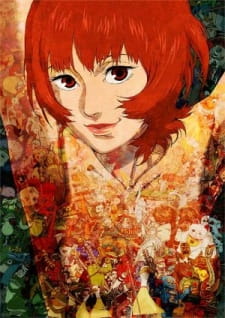


 ,
,  ,
,